
When you think about a good teammate, who comes to mind?
The athlete encouraging everyone? The one bringing energy to the bench? The captain who knows what to say?
Those contributions matter. So does helping someone understand a drill, staying composed during a difficult stretch, or giving honest feedback respectfully.
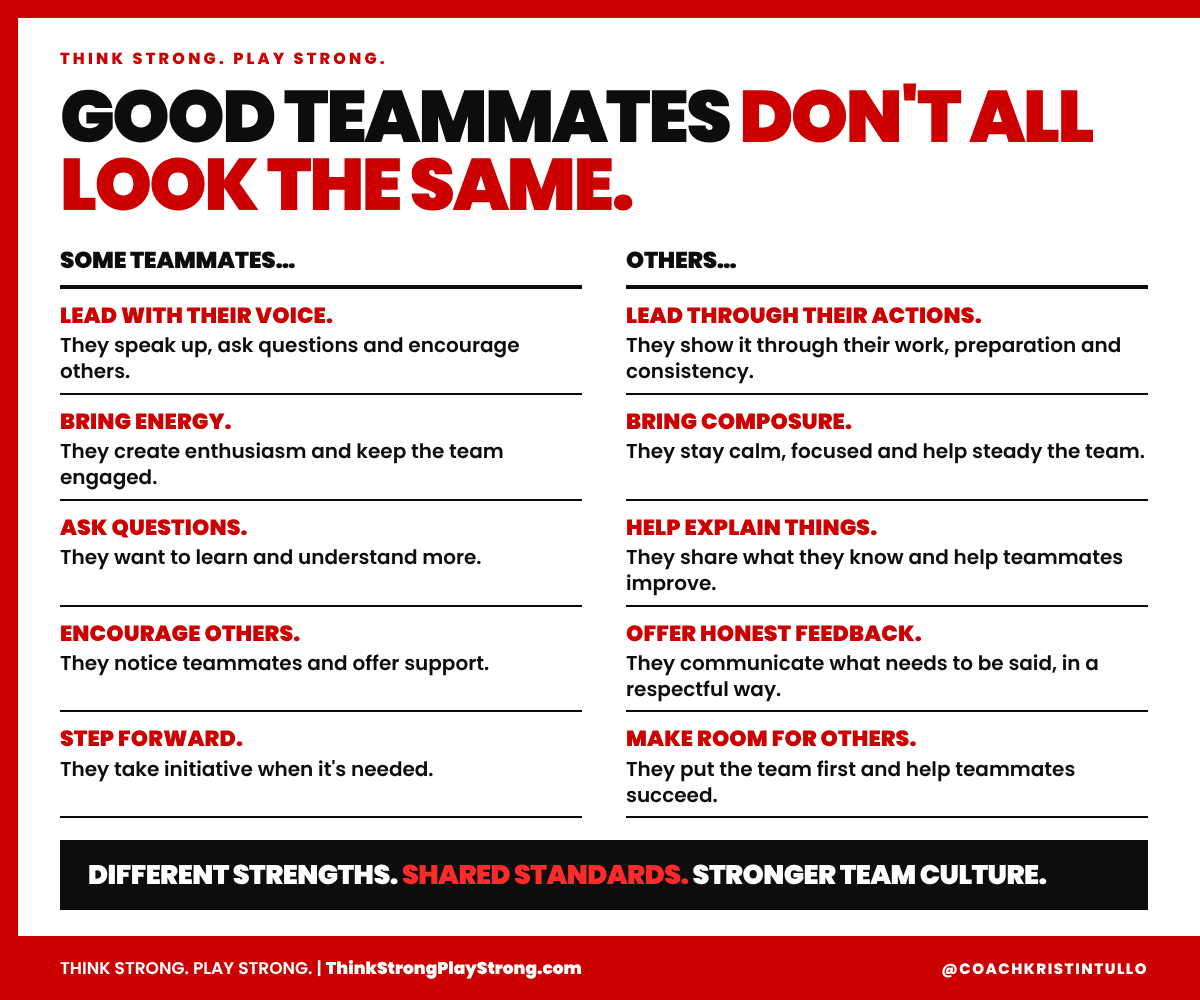
Good teammates don’t all look the same.
Being a good teammate means preparing, communicating, taking responsibility, and helping the people around you succeed. How you do that can look different from the athlete standing next to you.
You may already bring more to your team than you recognize.
What qualities make someone a good teammate?
Think about the teammates you can count on.
They come ready to practice. They listen when someone is speaking. They take responsibility when they make a mistake and follow through when something needs to change.
They also pay attention to the people around them.
Some notice when the team needs energy. Others recognize when everyone needs to settle down and refocus.
Some ask questions that help the whole group understand. Others share what they know with a teammate who is still learning.
There are athletes who step forward when something needs to be done. There are also athletes who make room for someone else to contribute.
A team needs different strengths throughout a season. Recognizing yours helps you understand how you can contribute today, even while you’re working toward a bigger role or improving your performance.
Do you have to be loud to be a good teammate?
You don’t have to be the athlete giving the pregame speech.
You might lead through how you prepare, the effort you bring, or the way you include someone who is new to the team.
But being quiet doesn’t remove the responsibility to communicate.
If your teammate needs to hear you call for a pass, identify an assignment, or explain what you see, practice doing that. Start with the situations where your voice can help someone make a decision.
Instead of telling yourself, “I need to be louder,” ask:
“What does my teammate need to hear from me on this play?”
That gives you something specific to work on.
The same applies if you’re naturally vocal. Bringing energy is valuable. So is knowing when to listen, let someone else speak, or help the team settle.
How do you support a teammate after a mistake?
Pay attention to what helps them get ready for the next play.
Some athletes respond well to a quick reminder:
“Take a breath. We’ve got the next one.”
Others may need a moment before they’re ready to hear anything.
If you’re unsure, check in. “What do you need?” can be more useful than giving three corrections while someone is still frustrated.
There will also be times when something needs to be addressed. You can offer honest feedback and still be supportive.
“Let me know earlier when you’re switching” gives your teammate information they can use.
Throwing your hands up or saying, “You keep doing that,” adds frustration without giving much direction.
Think about what you would need in that moment. Then learn what works for your teammate, because it may be different.
What if you’re frustrated with your playing time?
You can want more playing time and still be a good teammate.
It’s understandable to feel disappointed when your role is different from what you hoped. You don’t have to pretend otherwise.
But your response still affects the team.
Are you paying attention so you’re ready if you’re called on? Are you continuing to bring effort to practice? Can you support the athlete who is playing while also working to earn more opportunities?
Those are choices you can make while you’re frustrated.
You can also talk to your coach. Ask:
“What do I need to improve to earn more opportunities?”
Make sure you understand the answer. If the feedback is “be more consistent,” ask what that would look like in practice.
Leave the conversation with something you can work on, then follow through.
Your role can be something you’re working to change while you continue contributing to the team.
Being a good teammate includes accountability
Encouragement matters. So does being willing to have a respectful conversation when a standard isn’t being met.
If you expect teammates to listen, you need to listen. If you want them to own mistakes, you need to take responsibility for yours.
That can be harder when you’re tired, disappointed, or having a difficult game. Those are also the moments when following through matters.
You don’t need to have the perfect response every time. If you snap at someone or stop communicating after a mistake, recognize it and address it.
“I was frustrated, and I took it out on you. I’ll handle that differently.”
Then put that into practice the next time.
Accountability includes being willing to receive feedback, too. Give your teammate a chance to explain what they need from you before deciding they’re wrong.
Bring your strengths. Practice what your team needs.
Every athlete is responsible for preparing, communicating, showing respect, and taking responsibility.
Your personality may influence how you do those things. It doesn’t decide whether you need to do them.
A quieter athlete may need to practice speaking up during a play. An energetic athlete may need to practice staying composed. Someone who usually takes charge may need to make more room for others.
At your next practice, think about two questions:
What do I already do that helps this team?
What do my teammates need from me more consistently?
Choose an action you can follow through on. Help someone understand the drill. Communicate earlier. Check in after a difficult rep. Listen without interrupting.
Then notice whether you did it, especially when practice became difficult or you were focused on your own performance.
That’s how being a good teammate becomes something your team can see and count on.
Different strengths. Shared standards. Stronger team culture.
I’m Kristin Tullo, a mental performance and strength and conditioning coach. For more than 15years, I’ve worked with athletes from youth through college, helping them prepare for the demands of their sport.
Through Think Strong. Play Strong., I help athletes and coaches build confidence, focus, composure, and team culture with practical tools they can use in practices and games.
That includes learning how to communicate, respond after mistakes, understand your role, and be someone your teammates can count on. These are skills we can teach and practice throughout the season.
